
Hot tag
Popular search
FMUSER Releases Widevine-Based FMUSER-DRM Protected IPTV System
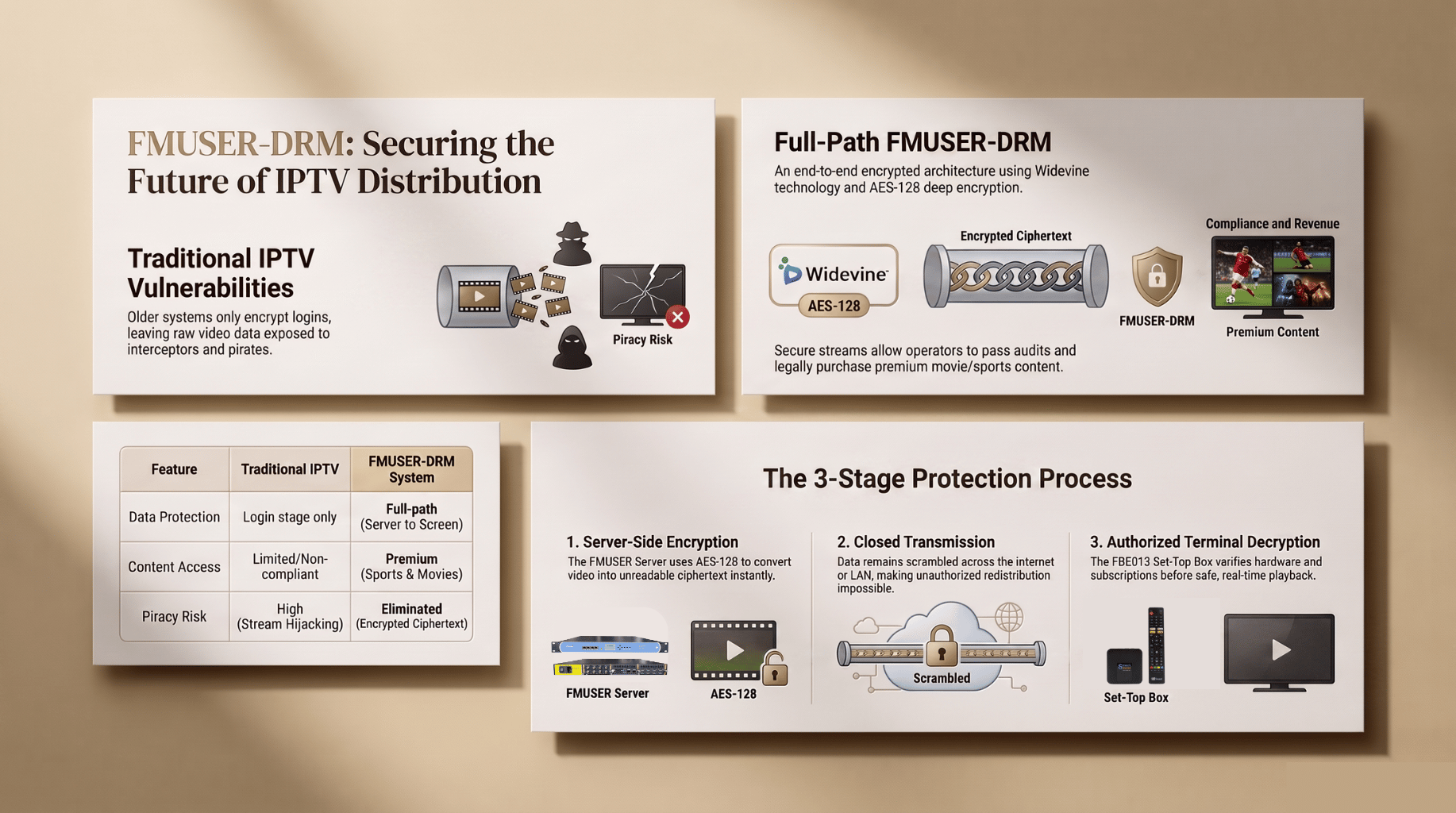
As copyright protection regulations for digital content become increasingly strict in the global video streaming industry, Digital Rights Management (DRM) technology has become essential infrastructure for streaming distribution and IPTV system construction. To address the technical barriers that global Internet Service Providers (ISPs) and hotel system integrators face when acquiring authorized premium content, IPTV system developer FMUSER recently released a new solution integrating end-to-end encryption.
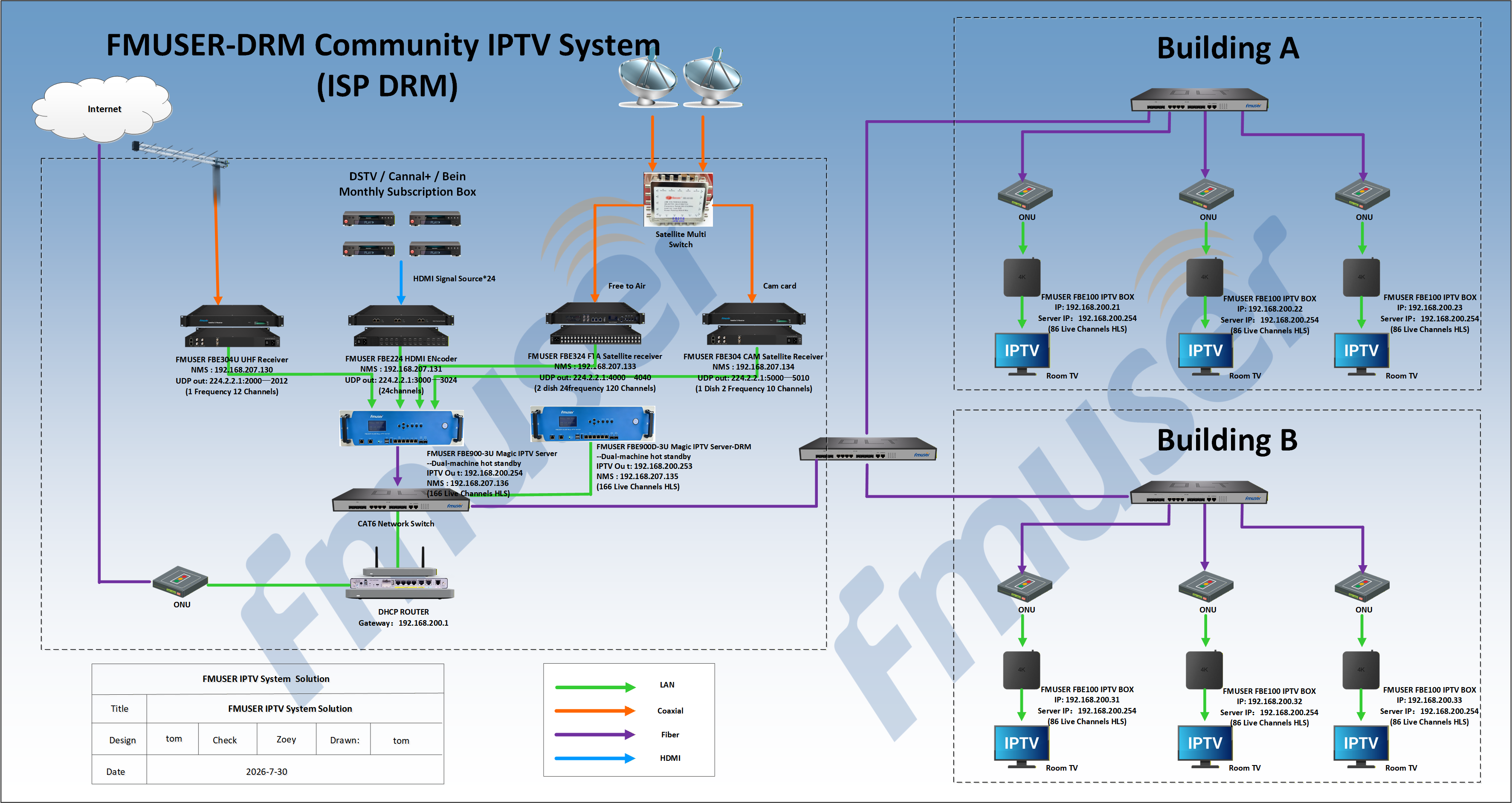
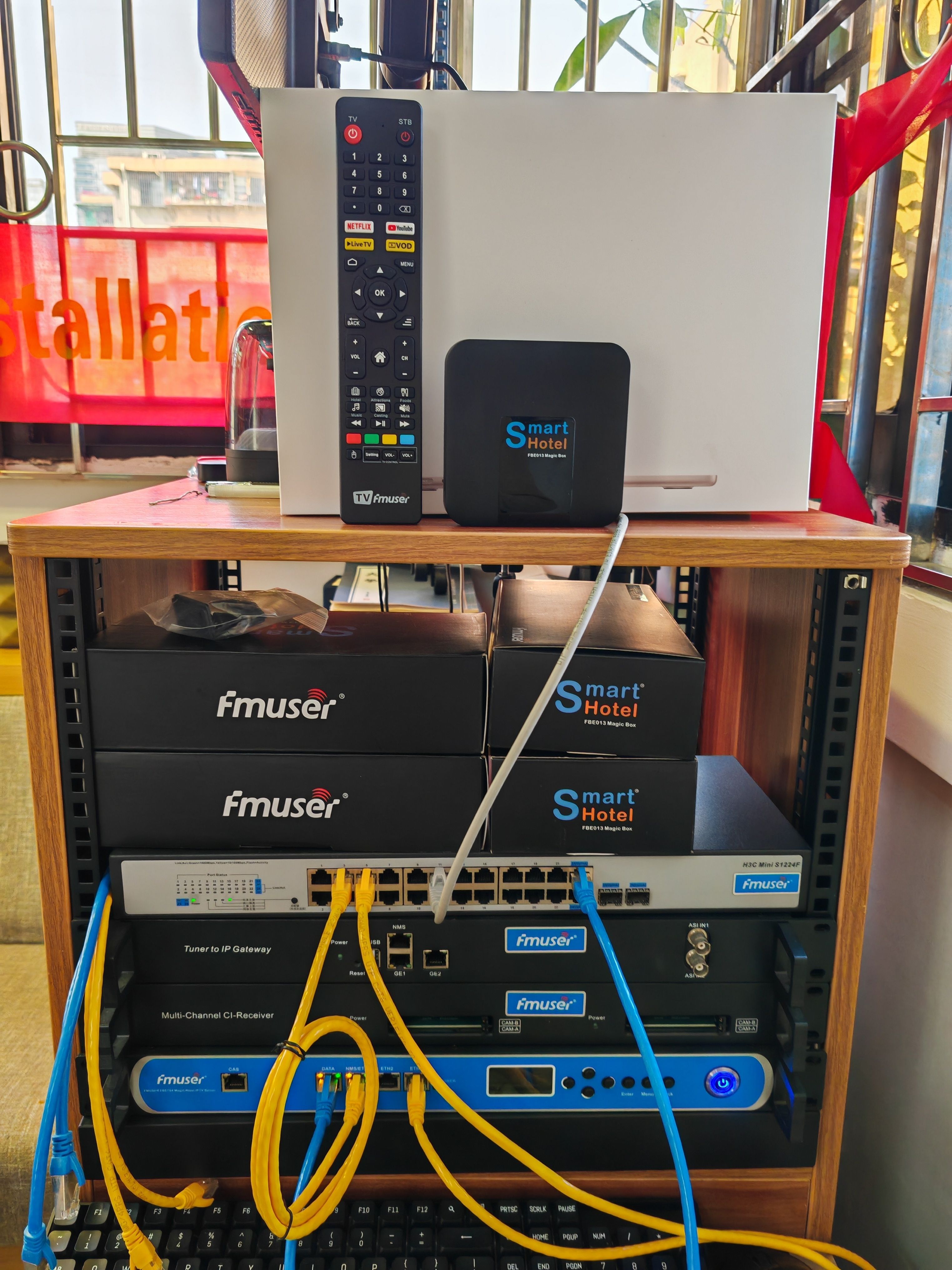
FMUSER is the first company in China to implement such a detailed, full-path FMUSER-DRM protection mechanism within an IPTV system. The core hardware foundation of this system consists of the FMUSER Server (FBE800/FBE700/FBE803/FBE900) and the terminal device FMUSER FBE013 SET-BOX. This release marks FMUSER's provision of a highly cost-effective data stream encryption system that meets international enterprise-level security and compliance standards for regional broadband operators and hotel network builders worldwide.
1. Industry Background: Security Flaws in Traditional IPTV Systems
Top-tier international content distributors, such as major film studios and international sports leagues, impose stringent anti-piracy technical requirements on licensed digital content. However, traditional enterprise-level encryption solutions often rely on expensive software licensing fees, complex integration processes, and specific costly hardware. This significantly compresses the profit margins of regional ISPs and mid-sized hotel groups. To control costs, many operators have adopted traditional, highly cost-effective IPTV systems that lack underlying data protection.
Technical evaluations reveal that many traditional IPTV systems on the market have obvious security vulnerabilities. These systems typically only encrypt the initial "user login verification" stage. The working logic is simple: after a user enters their account and password, the front-end device sends a verification request to the database. Once the device passes authentication and retrieves the TV channel list, the video data stream sent by the core server is transmitted directly across the network in an unencrypted, plaintext state.
This architecture, lacking underlying data stream encryption, presents immense security risks. Illegal network interceptors do not need advanced hacking skills; they only need basic network packet-sniffing software to intercept and illegally sell these video streams at data centers, fiber nodes, or local area network (LAN) switches. For ISPs, this not only results in a severe waste of expensive network bandwidth resources but also directly causes a massive loss of legitimate subscription revenue. Simultaneously, systems lacking data stream protection cannot pass the compliance audits of international content providers, preventing ISPs from legally purchasing premium TV channels and live sports broadcasting rights.
2. Technical Principles: Widevine-Based FMUSER-DRM Full-Path Encryption Mechanism
Addressing the aforementioned security pain points, the FMUSER technical team comprehensively upgraded the underlying video distribution architecture of their IPTV system. The system abandons the basic surface-level account verification model and fully introduces a "full-path FMUSER-DRM data stream protection" mechanism based on Widevine technology. The core objective of this mechanism is to use standard cryptographic processes to ensure that video data remains in a highly encrypted, closed state at every step—from output at the core server room to decoding and display on the terminal screen.
Specifically, the FMUSER system's full-path encryption logic is divided into the following three core technical stages:
1) Stage 1: Server-Side Real-Time Deep Encryption
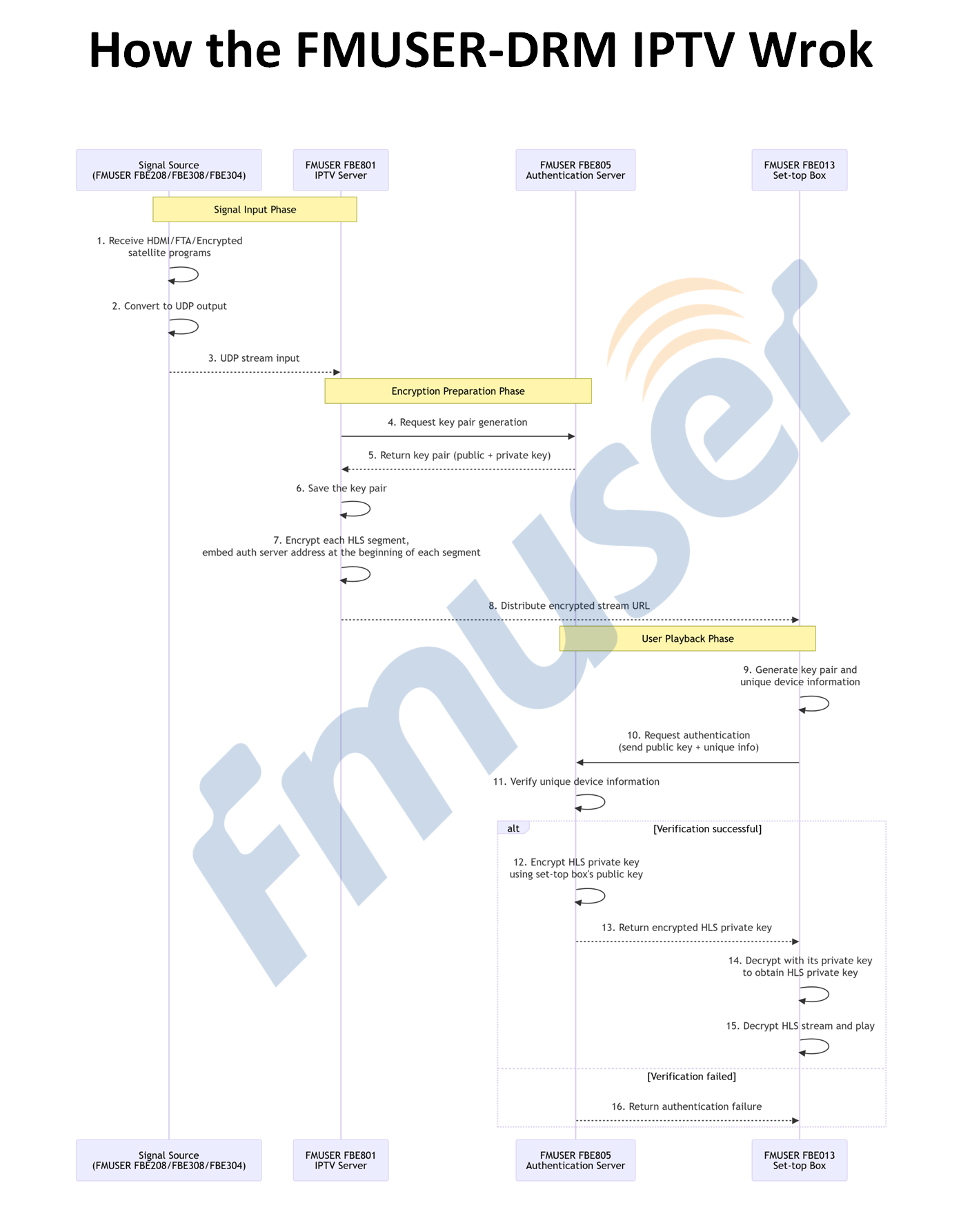
When video streams (including Video on Demand source files and live TV streams) enter the core network for external distribution, the FMUSER Server (FBE800/FBE700/FBE803/FBE900) actively intervenes in the underlying encryption process. First, the server sends a legitimate verification request to the official Widevine Key Server via a secure communication channel. Upon confirming the request's validity, the Key Server issues a dedicated data encryption key to the FMUSER Server. Subsequently, utilizing its robust underlying data processing capabilities, the device applies the Advanced Encryption Standard (AES-128 algorithm) to perform real-time, deep encryption on all video segments and continuous data streams. After processing, the original audio and video data are entirely converted into complex ciphertext that regular video playback software cannot read. This ensures that video source files receive maximum security protection the moment they leave the server room.
2) Stage 2: Closed Transmission of Ciphertext Across the Network
Following encryption, the video streams undergo physical transmission through complex network environments. Whether navigating the public internet, an ISP's fiber backbone network, or a hotel's internal LAN, these video data packets consistently maintain their encrypted ciphertext form. Throughout this network transmission phase, even if hackers launch malicious man-in-the-middle attacks or conduct large-scale data interception at critical network nodes, they only acquire meaningless strings of garbled data. Without a valid decryption key, pirates cannot reverse-engineer these ciphertexts back into video files, nor can they illegally redistribute the intercepted data streams. This mechanism completely blocks the possibility of video theft and signal hijacking at the physical network layer.
3) Stage 3: Terminal Device FMUSER-DRM Authorization Decryption and Playback
When the highly encrypted video stream finally reaches the end user's home or hotel room and enters the FMUSER FBE013 SET-BOX, the standard playback software inside the device cannot directly play the video. At this point, the underlying FMUSER-DRM control module automatically activates and assumes data processing authority. The terminal initiates a secondary identity verification request to the Widevine License Server independently within its operating system's Trusted Execution Environment (TEE)—a hardware sandbox with extremely high security isolation from the main system. During this process, the License Server strictly verifies whether the device is authorized hardware, whether the currently logged-in user has purchased the corresponding TV package, and whether any specific playback rules set by the content provider apply (e.g., allowing 4K Ultra HD output or external recording devices). Once all security conditions pass verification, the server sends a digital license containing a unique decryption key to the terminal device. Within the fully isolated secure hardware environment, the device uses this license to perform real-time decryption calculations on the incoming video stream, ultimately outputting a clear picture to the connected TV screen. This process operates fully automatically at the system level with extreme speed.
3. Commercial Application Value: How FMUSER-DRM Helps ISP and Hotel Businesses Achieve Stable Growth
FMUSER's successful research and development in full-path encryption technology provides global B2B clients with substantial commercial monetization support and risk avoidance capabilities. This Widevine-based encryption system significantly enhances clients' streaming businesses in the following three key areas:
1) Satisfying Strict Content Compliance Audits to Legally Introduce Premium Video Resources
For global telecom broadband operators and hotel network integrators, premium video content is the core asset for attracting continuous end-user subscriptions. Mainstream film studios, major copyright agencies, and top sports networks mandate that network operators deploy officially certified encryption systems when licensing the commercial broadcast rights to their audiovisual works. The FMUSER system's deep integration of underlying protection technology equips ISPs and hotels with the technical conditions required to pass stringent copyright audits. Operators can legally purchase and broadcast the latest cinematic releases and globally recognized live sports events. Rich, legitimate content directly elevates the market competitiveness of broadband packages and significantly boosts the operating revenue of high-end hotel room Video on Demand (VOD) services.
2) Completely Severing the Illegal Piracy Supply Chain to Protect Core Corporate Profits
In multiple regional markets globally, the illegal theft of IPTV television signals is a massive daily challenge for operators. The Widevine-based FMUSER-DRM full-path encryption technology renders illegal network data scraping behaviors obsolete. Even if hackers duplicate the video stream originating from the server within the backbone network, they remain completely unable to play the video content without a legal set-top box and the corresponding authorized license. This technical mechanism directly plugs the dual security vulnerabilities of stolen network bandwidth and high-value video content leakage, ensuring that the enterprise's core profits are no longer infringed upon by digital pirates.

3) Perfect Android Ecosystem Compatibility to Drastically Reduce System Deployment Costs
In hotel room systems and home broadband television scenarios, the Android operating system dominates the market. Widevine, as a system officially developed by Google, features exceptionally high underlying compatibility with Android hardware devices. The FBE013 SET-BOX is developed precisely on a high-performance Android architecture, forming a flawless hardware and software synergy with the server-side streaming media processing architecture. Consequently, when overseas clients purchase the entire system, they do not need to undertake complex and expensive custom system development, nor do they need to hire large technical maintenance teams. Clients obtain top-tier international security services at a highly cost-effective rate, substantially reducing the overall initial system deployment and subsequent operational costs.
4. System Performance Assurance and Future Cross-Platform Technology Roadmap
Upon introducing high-intensity video encryption and decryption mechanisms, operators typically worry whether the system's operating speed and the end user's viewing experience will be negatively impacted. Addressing this concern, the FMUSER technical team conducted deep underlying code optimization on the streaming media processing mechanism during the R&D phase.
According to strict internal technical tests and data simulating high-concurrency scenarios, the FMUSER system effectively offsets the hardware computational pressure brought about by the data encryption and decryption processes. This is achieved by optimizing the terminal device's concurrent processing logic for requesting licenses and enhancing the data processing algorithm of the server's video buffer pool. Under the premise of ensuring high-level security protection operates stably around the clock, the system maintains exceptionally fast network response speeds. When end users switch TV channels, they experience extremely low latency. Furthermore, when playing Full HD (1080P) or 4K Ultra HD video, there is no screen freezing or audio-video desynchronization. This system design perfectly balances enterprise-grade data security performance with a fluid visual experience.
Regarding the future product evolution roadmap, the FMUSER R&D team announced its strategic plan for multi-terminal ecosystem coverage. Currently, Widevine-based encryption protection has achieved extensive and mature commercial deployment in the global market through a complete set of hardware products. In upcoming system software version upgrades, the R&D department will gradually add underlying support for Apple FairPlay technology. At that time, the FMUSER IPTV system will achieve comprehensive security coverage for iOS mobile devices and Apple TV terminals, further meeting the cross-platform digital rights distribution demands in high-end business hotel environments and complex network conditions.
Conclusion
The IPTV system integrating full-path FMUSER-DRM protection, jointly composed of the FMUSER Server (FBE800/FBE700/FBE803/FBE900) and the FMUSER FBE013 SET-BOX, provides a highly standardized and commercially valuable solution for global network operators and hotel system integrators. The system not only precisely intercepts piracy risks through rigorous end-to-end cryptographic technology but also guarantees ultimate system operational efficiency through deep hardware and software ecosystem optimization. It stands as the ideal technical platform for mid-sized network operators and hotel network service providers worldwide to build modern, legalized audiovisual distribution networks.


CONTACT US


FMUSER INTERNATIONAL GROUP LIMITED.
We are always providing our customers with reliable products and considerate services.
If you would like to keep touch with us directly, please go to contact us
-
![Home]()
Home
-
![Tel]()
Tel
-
![Email]()
Email
-
![Contact]()
Contact


